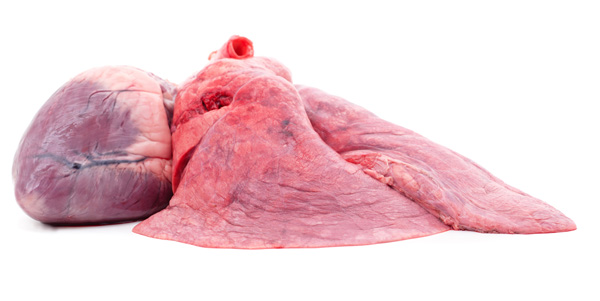
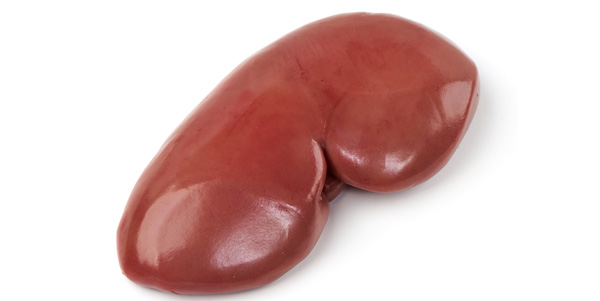
Heart (HT): Heart without pericardium attached and 1-2” of the primary vessels attached.
Heart with Thoracic Aorta (HTAT): Heart without pericardium and 1-2” of the primary vessels attached. The entire thoracic aorta (~14”) is attached.
Heart with Pericardium attached (HTPC): 1-2” of the primary vascularity attached.
Heart Lung Block (HTLB): Heart with pericardium, lungs,
Heart Lung Block with Pleural Membrane (HTLBPM): Heart with pericardium, lungs with intact pleural membrane (a few nicks may exist in the pleural membrane), esophagus, trachea, and larynx.
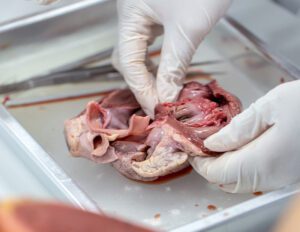
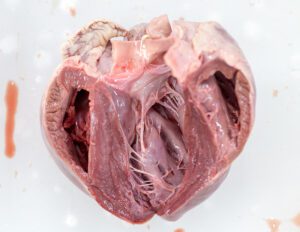
Aorta – whole (AW): The portion of the aorta from the attachment point of the left ventricle to the diaphragm. Measures approx. 10” in length and 25 mm round
Carotid Arteries 3-7 mm. Round (CA37R): Carotid arteries that measure 3 mm at the cranial end and up to 7 mm at the caudal end with a round diameter measurement of the inner lumen. Each vessel is approximately 4” in length and is skeletonized unless specified.
Carotids Arteries 3-7 mm. Flat (CA37F): Carotid arteries that measure 3 mm at the cranial end and up to 7 mm at the caudal end with a flattened diameter measurement of the inner lumen. Each vessel is approximately 4” in length and is skeletonized unless specified.
Carotid Arteries 4-6 mm. Round (CA46R): Carotid arteries that measure 4 mm at the cranial end and up to 6 mm at the caudal end with a round diameter measurement of the inner lumen. Each vessel is approximately 4” in length and is skeletonized unless specified.
Carotid Arteries 4-6 mm. Flat (CA46F): Carotid arteries that measure 4 mm at the cranial end and up to 6 mm. at the caudal end with a flattened diameter measurement of the inner lumen. Each vessel is approximately 4” in length and is skeletonized unless specified.
Carotid Arteries 6-8 mm. Round (CA68R): Carotid arteries that measure 6 mm at the cranial end and up to 8 mm at the caudal end with a round diameter measurement of the inner lumen. Each vessel is approximately 4” in length and is skeletonized unless specified.
Carotid Arteries 6-8 mm. Flat (CA68F): Carotid arteries that measure 6 mm at the cranial end and up to 8 mm. at the caudal end with a flattened diameter measurement of the inner lumen. Each vessel is approximately 4” in length and is skeletonized unless specified.
Carotid Arteries at Custom Length (CACL): Carotids are specially harvested at a client specified inner lumen diameter (3-7 mm, 4-6 mm. or 6-8 mm. ) (round or flat measurement) and a specific length of the artery other than the standard 4”.
Costocervical Arteries (CCA): Skeletonized unless specified. They are a diameter of 1-2mm in measurement of the inner lumen and approximately 4” in length.
Hepatic Artery (HPA): The common hepatic artery is skeletonized unless specified. The harvested length measures approx. 2.5”. The artery measures 6 mm inner lumen diameter at the aorta and 2 mm inner lumen diameter at the distal end.
Hepatic Portal Vein (HPV): This vein measures 2” in harvested length. It is 20 mm inner lumen diameter for it’s entire harvested length.
Jugular Vein (JV): The exterior jugular vein is approximately 3” in harvested length, and 10 mm in inner lumen round diameter.
Jugular Vein Interior (JVI): The interior jugular vein is approximately 3” in harvested length and ~ 5 mm in inner lumen round diameter.
Pulmonary Arteries (PA): These arteries include the pulmonary trunk (16 mm inner lumen diameter) and the left (11 mm inner lumen diameter) and right (8 mm inner lumen diameter) pulmonary arteries as they enter the lungs. The harvested length is approximately 2 ½ “ long.
Pulmonary Veins (PV): These veins measure 10 mm inner lumen diameter on the left vein and are 6 mm inner lumen diameter on the right vein as they enter the lungs. They are harvested at 2” in length.
Thyrocervical Artery (TYCA): The thyrocervical artery measures approximately 2 mm. in flattened diameter and is 2” in harvested length.
Thyrocervical Vein (TYCV): The thyrocervical vein measures approximately 2 mm. in flattened diameter and is 2” in harvested length.
Inferior Vena Cava (VCW): This tissue is harvested at approximately 4” in length and a diameter of 25 mm.
Gastropiploic Artery (GPA): This vessel is skeletonized unless specified. It measures 1-2 mm in diameter and is approximately 4” in length. This vessel exhibits a great deal of branching.
Gastropiploic Vein (GPV): This vessel is skeletonized unless specified. It measures 1-2 mm in diameter and is approximately 4” in length. This vessel exhibits a great deal of branching.
Spleen with both Cranial and Caudal bundles (SPCCVB): This includes the spleen with the cranial and caudal bundles attached, which are comprised of the artery, vein and nerve bundle within the myelin sheath.
Spleen with Cranial Artery (SPCRAWSP): The spleen with the cranial artery attached. This artery measures 3” in length and has an inner round lumen measurement of 2 mm. The artery is skeletonized.
Spleen with Cranial Vein (SPCRVWSP): The spleen with the cranial vein attached. This vein measures 3” in length and has an inner flat lumen measurement of 2 mm. The vein is skeletonized.
Splenic Vascular Bundle (SPVB): Choose the cranial or caudal vascular bundle. Each bundle includes the splenic artery and vein and nerve within the myelin sheath.
Splenic Cranial Vein (SPCRV): This vein is approximately 3” in length with an inner round lumen measurement of 1 mm. This artery is skeletonized.
Splenic Cranial Artery (SPCRA): This artery is approximately 3” in length with an inner round lumen measurement of 2 mm. This artery is skeletonized.
Splenic Caudal Artery (SPCUA): The spleen with the caudal splenic artery attached. The artery measures 3” in length and has an inner round lumen measurement of 2 mm.
Splenic Caudal Vein (SPCUV): The spleen with the caudal splenic vein attached. The vein measures 3” in length and has an inner flat lumen measurement of 1 mm.
Porcine circulatory tissues are widely used in medical research, device testing, and procedural training because their cardiovascular anatomy offers valuable similarities to human vascular and cardiac structures. Hearts, arteries, veins, and vascular bundles can support realistic evaluation of tissue handling, access, suturing, flow-path modeling, and device interaction.
Compared to synthetic models, porcine circulatory tissues provide:
These qualities make porcine cardiovascular tissue especially valuable when researchers require biologically representative specimens for benchtop testing, educational labs, and preclinical product development. ABI provides ethically sourced porcine circulatory tissue using controlled harvesting, handling, and delivery protocols.
Porcine circulatory tissues support a broad range of cardiovascular, vascular, and translational research applications. Available preparations may be used for anatomical study, catheter-based device evaluation, surgical simulation, and medical product development.
Common applications include:
Hearts and heart-lung blocks can support cardiac and thoracic procedural work, including CABG, pronounced “cabbage,” or coronary artery bypass grafting. In this major cardiac procedure, a healthy blood vessel is grafted to bypass a blocked coronary artery and restore blood flow to the heart muscle. Porcine cardiac and vascular tissues can provide a valuable hands-on model for clinicians and trainees practicing bypass-related surgical techniques.
ABI supports medical device manufacturers, universities, hospitals, and government research organizations with customized harvesting and coordinated delivery. Temperature-controlled packaging and validated logistics help preserve tissue integrity from collection through arrival.
Porcine circulatory tissues are used for cardiovascular research, vascular device testing, surgical training, anatomical education, and preclinical product development. These tissues can support work involving hearts, arteries, veins, vascular bundles, and connected cardiothoracic structures.
Yes. Porcine cardiovascular tissues are commonly used in device development because they provide realistic cardiac and vascular anatomy. They may help support evaluation of catheters, grafts, stents, access tools, fixation methods, and other cardiovascular technologies.
Available tissues may include hearts, hearts with attached aorta, heart-lung blocks, aortic sections, carotid arteries, jugular veins, pulmonary arteries and veins, vena cava tissue, hepatic vascularity, gastric vascularity, and splenic vascular bundles.
Yes. ABI can provide custom harvest options based on project specifications. Researchers may request particular vessel diameters, lengths, attached structures, skeletonized vascularity, or broader anatomical preparations depending on their study or training needs.
Yes. ABI offers heart-lung block preparations, including options with pericardium, lungs, pleural membrane, esophagus, trachea, and larynx attached. These specimens can be useful for anatomical study, thoracic training, and integrated cardiopulmonary models.
Porcine circulatory tissues are harvested post-mortem under controlled conditions and processed promptly to help preserve usability. Temperature-controlled packaging, cold packs or dry ice, and coordinated delivery timelines help maintain tissue integrity during transport.
Yes. Porcine hearts and associated vascular tissues may be used in surgical training models for CABG, or coronary artery bypass grafting, which is often pronounced “cabbage.” CABG is an open-heart procedure in which a healthy blood vessel is used to create a new route around a blocked coronary artery. These tissues can support hands-on practice involving cardiac anatomy, vessel handling, graft placement, and related bypass techniques.
Circulatory tissues are often used in cardiovascular research programs, surgical training labs, and medical device validation studies where anatomical specifications and delivery timing are critical. Early coordination helps ensure the appropriate tissue preparation, vessel dimensions, attached structures, and shipping schedule for your application.
To discuss custom harvesting options or arrange delivery, visit our Contact page to connect with the ABI team.
Browse our available tissues by category, or access a PDF of the complete catalog here.
For an alphabetical list of our available tissues, please click here.