
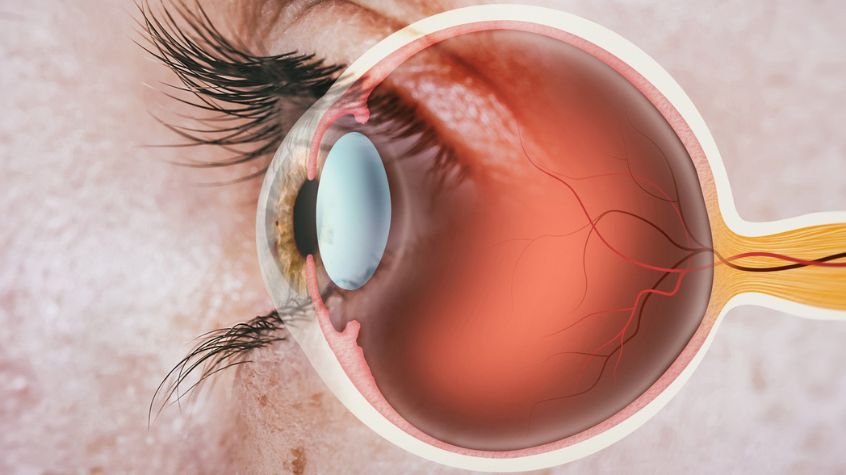
Finding the best alternatives to human tissue has become essential in modern vision science research. As vision impairment continues to rise globally, scientists are searching for reliable, ethical, and scalable ways to study the eye without relying solely on human donor tissue.
Today, more than 250 million people worldwide are blind or live with significant vision loss that cannot be corrected with lenses. With longer life expectancies and limited access to specialized eye care, the demand for new vision treatments is higher than ever, and researchers need consistent access to quality biological material to make progress.
Why Is Human Eye Tissue Hard to Source for Research?
A 2025 study in Nature revealed the extent of the problems faced by researchers who need access to post-mortem human eyes. Because the eye breaks down so quickly after death, retrieval of donor tissue must be done rapidly and transported rapidly as well, to be useful to researchers.
However, based on recoveries at a U.S. eye bank across 2022–23, these goals are rarely met:
- Only 32% of donor eyes were recovered and shipped within the preferred 12-hour post-death timeframe.
- Even fewer (just 27%) were successfully delivered during standard working hours when trained technicians were available.
So even if a donor has allowed their eyes to be used by science, well under one-third are actually utilized.
The research points to specific policy changes that could improve these numbers by increasing office hours as well as being more lenient about post-death shipping times. However, even then, a substantial number of eyes would still go unused.
This would logically result in a reduction in research, an assumption backed up by a 2018 survey of researchers attempting to source human ocular tissue. 43% reported that it was “difficult” or “very difficult” to obtain human eyes. Similar numbers also reported that they had to scale back research due to tissue unavailability or – perhaps worse – that they doubted the quality of the tissue they were working with.
In short, the difficulties of vision science tissue sourcing have become a significant barrier to quality research, even as the need for such research continues to increase globally.
What Are the Best Alternatives to Human Eye Tissue?
Fortunately, there is a viable solution: porcine eyes for research.
Porcine eyes are increasingly seen as one of the best alternatives to human tissue because they share many characteristics with human eyes:
- Comparable size and shape
- Round pupils and a similar optic nerve structure
- Comparable rod and cone arrangements
- A similar microscopic and cellular makeup
Although there are small differences, such as slightly thicker corneas, their overall structure makes them ideal for most forms of ocular research.
How Are Porcine Eyes Used in Vision Science?
Porcine eyes have been utilized in several key areas of research:
- Glaucoma research: First validated in a 2005 Experimental Eye Research study.
- Retinal disease studies: A 2024 survey confirmed swine tissue as a valid model for studying genetic retinal disorders.
- Corneal repair: A 2022 experiment used rendered swine collagen to repair corneas damaged by keratoconus.
However, they are not a perfect 1:1 substitute in every case. A 2001 Journal of Biomechanics study found that differences in corneal elasticity made swine eyes unsuitable for specific stress-relaxation studies, though they remained acceptable for most other corneal research.
Despite these limitations, the consistency and accessibility of swine tissue make it one of the most dependable alternatives to human eye tissue available today.
What Are the Advantages of Using Swine Tissue?
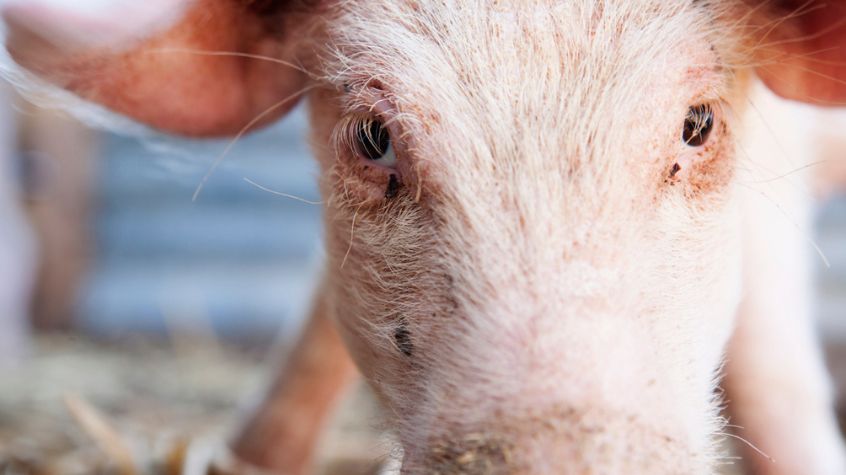
Beyond biological similarities, swine tissue offers several distinct advantages:
- Easier to source and available in consistent quantities
- Ethically and humanely obtained from USDA-inspected animals
- Cost-effective compared to human donor tissue
- Biocompatible and safe for translational research
- Custom-harvested to match specific research needs
Swine tissue can even be used in innovative applications that human tissue cannot easily support, such as collagen-based corneal repair.
Where Can Researchers Find High-Quality Porcine Eyes?
Animal Biotech Industries is among the nation’s leaders in providing top-quality post-mortem swine tissue to researchers around the country, and around the world. Since our founding in 1990, we have been relentlessly focused on providing the best in research-grade materials for science, including custom-harvested porcine eyes for research.
ABI porcine tissue comes exclusively from their trusted USDA-certified porcine abattoir partner, providing animals that have lived and died humanely. All materials are harvested by ABI’s highly-trained specialists, and are harvested to order – whatever you need, whenever you need it.
Our commitment to sustainable solutions extends to our shipping policies as well. Whenever possible, materials are shipped in eco-friendly containers with cold packs that are both biodegradable and reusable. Our shipping times meet your needs, with 24h deliveries frequently arranged, and same-day shipping often possible as well. Just like our swine tissue, our delivery and handling is also custom-selected for your needs.
If you need a consistent research tissue supply, that’s no problem either. We’ll work with you to ensure you always have the tissues you need for research or educational purposes, at reasonable rates.
If you would like to learn more, or would like to consult on the best tissue selection for your study goals, all you need to do is contact us. Or else, click here to browse our full catalog of swine tissues. Need something which isn’t listed? Just ask!