
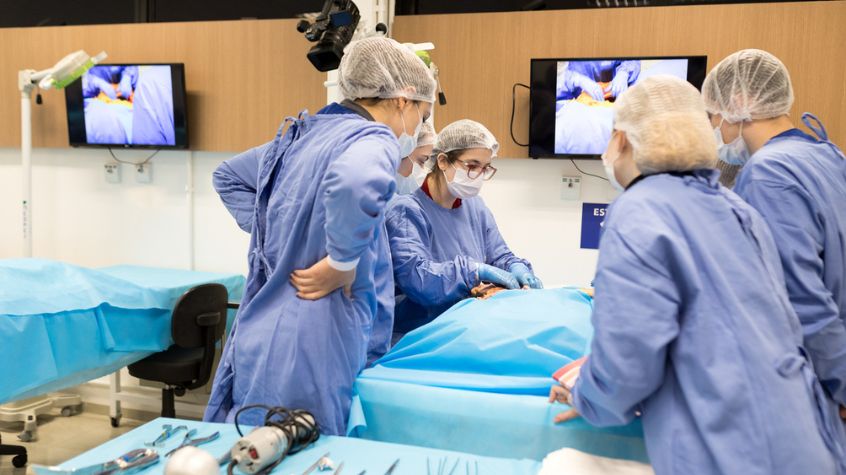
Preclinical research depends on speed, consistency, and biological accuracy. When tissue samples lose viability or experience transport related degradation, your research outcomes can become less reliable. That’s why on site laboratory tissue testing has become the gold standard for organizations focused on improving data quality and reducing study variability.
Access to fresh tissue for preclinical research within the same facility where processing and preparation occur gives your team tighter control over sample handling, timing, and preservation. This approach helps support biological sample integrity in research while minimizing the risks commonly associated with shipping and storage delays.
As demand grows for accurate translational research models using porcine tissue, post mortem tissue, and other animal tissue research materials, laboratories are increasingly prioritizing tissue testing without transport delays.
What Is On-Site Laboratory Tissue Testing?
On-site laboratory tissue testing means tissue collection, preparation, evaluation, and processing occur within the same controlled facility instead of relying on external shipping or third-party transfer points.
This model allows researchers to work with fresher samples while maintaining tighter oversight over handling conditions and timelines.
In many preclinical studies, timing directly impacts tissue quality. Cellular degradation can begin shortly after procurement, especially when tissues are exposed to fluctuating temperatures or prolonged transportation windows. According to the World Health Organization’s cold chain guidance, maintaining proper environmental conditions is critical for preserving biological materials during handling and transport.
With on-site laboratory tissue testing, you reduce the number of variables that can compromise sample integrity before analysis even begins.
Why Does Same-Day Tissue Use Matter in Preclinical Research?
Same-day tissue use helps preserve native biological characteristics and improves research consistency.
When tissue is processed and used quickly after procurement, you can better maintain cellular structure, enzymatic activity, and physiological relevance. This is especially important in studies involving surgical training, device testing, regenerative medicine, and translational research.
Benefits of same-day tissue use include:
- Reduced cellular degradation
- Improved tissue responsiveness
- More reliable experimental outcomes
- Better reproducibility between studies
- Lower risk of contamination or temperature-related damage
Researchers looking to reduce variability in preclinical studies often focus heavily on procurement timing because even small delays can affect tissue behavior and downstream analysis.
How Does On-Site Access Improve Biological Sample Integrity In Research?
On-site access improves biological sample integrity in research by minimizing handling steps and shortening the time between collection and use.
Every transfer point introduces potential risks, including:
- Temperature fluctuations
- Packaging inconsistencies
- Mechanical damage during shipping
- Delayed processing times
- Chain of custody complications
When tissue remains within a single controlled environment, you gain greater consistency across procurement, preparation, and testing workflows.
This level of oversight is especially important for organizations conducting regulated studies or preparing for eventual clinical applications. The U.S. Food and Drug Administration’s preclinical research guidance emphasizes the importance of high-quality laboratory practices and reliable biological data during preclinical evaluation.
What Problems Do Transport Delays Create for Tissue Testing?
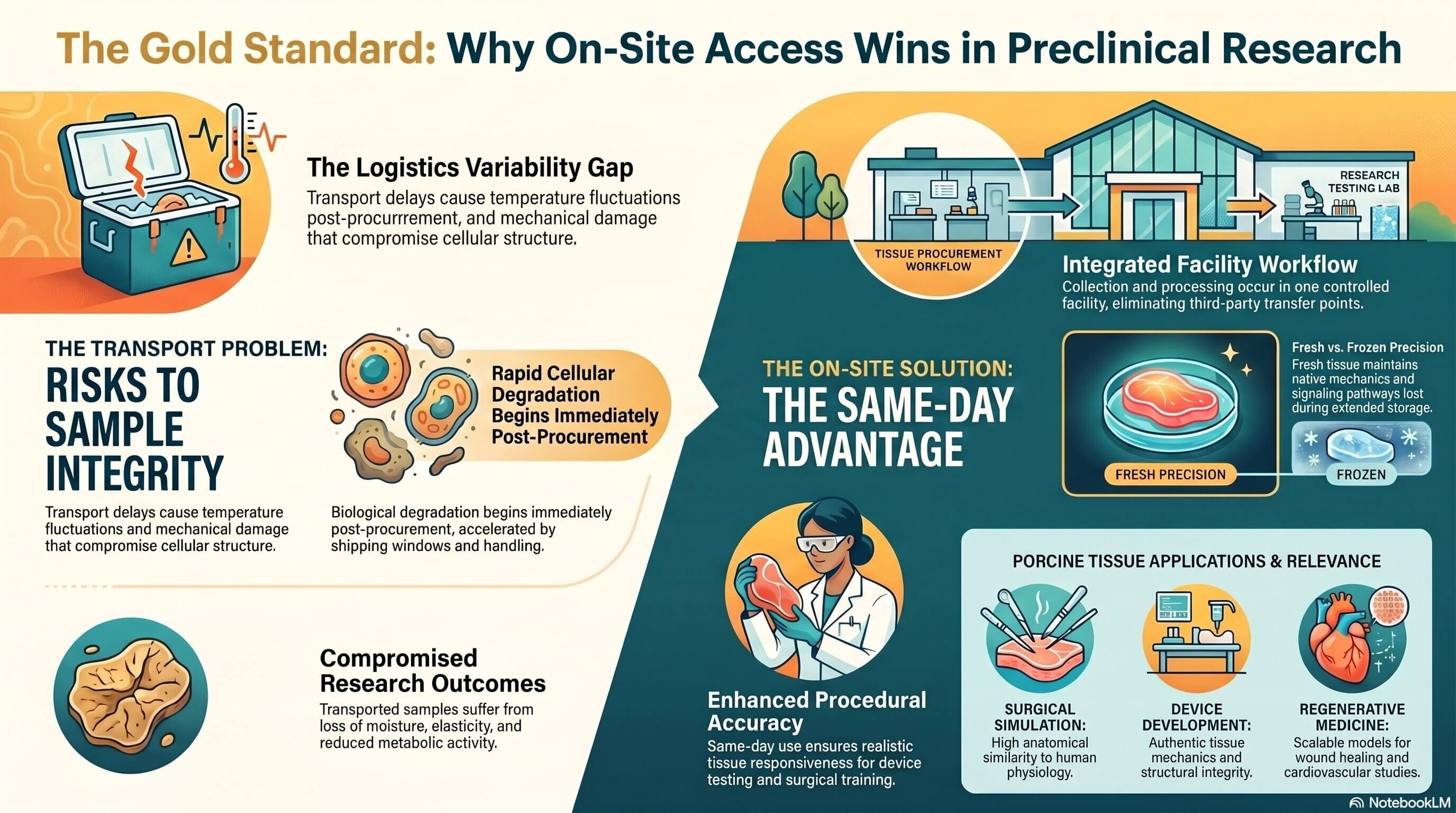
Transport delays can compromise tissue viability, alter biological behavior, and introduce variability into your research results.
Even with advanced cold chain systems, transportation still creates uncertainty. Delays caused by weather, logistics interruptions, or courier handling can impact tissue quality before the sample reaches your laboratory.
Common issues linked to preclinical research tissue logistics include:
- Loss of moisture and tissue elasticity
- Reduced metabolic activity
- Temperature instability
- Increased degradation rates
- Inconsistent sample quality across batches
Tissue testing without transport delays helps eliminate many of these risks by reducing the dependency on external shipping timelines.
Organizations that prioritize fresh tissue for preclinical research often see improved consistency because the tissue spends less time outside controlled laboratory conditions.
Why Is Porcine Tissue Commonly Used in Preclinical Research?
Porcine tissue is widely used because its anatomy and physiology closely resemble human tissue in many important ways.
Researchers frequently rely on porcine tissue for:
- Surgical simulation
- Device development
- Cardiovascular research
- Gastrointestinal studies
- Regenerative medicine applications
- Wound healing research
The structural similarities between porcine and human tissues make these models valuable for translational research and procedural validation.
Many organizations also prefer porcine tissue because it offers scalability and broad applicability across multiple medical and scientific disciplines. Access to high quality porcine tissues can help support more realistic testing environments while improving procedural accuracy.
How Does Fresh Tissue Improve Research Accuracy?
Fresh tissue for preclinical research often produces more biologically relevant data compared to frozen or heavily preserved samples.
Once tissue undergoes freezing or extended storage, certain biological characteristics can change. Structural proteins, cellular signaling pathways, and mechanical properties may no longer behave as they would in living systems.
Fresh tissue allows you to evaluate:
- Native tissue mechanics
- Realistic procedural interactions
- Authentic tissue responsiveness
- Accurate device performance
- More consistent histological analysis
For researchers focused on reducing variability in preclinical studies, fresh tissue access can improve both reproducibility and translational relevance.
What Role Does Facility Design Play in Tissue Quality?
Facility design directly affects tissue handling efficiency, environmental control, and processing speed.
Modern laboratories designed around on-site workflows can streamline procurement and preparation while supporting stronger quality control measures.
Features that improve tissue quality often include:
- Dedicated processing laboratories
- Controlled temperature environments
- Integrated procurement and preparation spaces
- Rapid distribution workflows
- Specialized storage systems
Facilities optimized for same-day tissue use can significantly reduce the risks associated with prolonged handling times and fragmented logistics.
Modern laboratories designed for rapid processing and sample integrity can significantly improve tissue handling efficiency and consistency.
How Does Animal Tissue Research Support Medical Innovation?
Animal tissue research supports the development of safer medical devices, surgical techniques, and therapeutic technologies before human clinical trials begin.
Preclinical models allow researchers to study biological interactions in controlled environments while evaluating safety, feasibility, and performance.
Common applications include:
- Medical device testing
- Surgical training
- Drug delivery systems
- Tissue engineering
- Biomaterial evaluation
- Procedure development
Using high-quality post-mortem tissue and fresh biological materials helps researchers produce more accurate and clinically relevant findings.
Organizations across healthcare, biotechnology, medical device development, and pharmaceutical research continue to rely on specialized providers that understand the demands of regulated preclinical environments. Many of these applications are represented across the industries we serve.
Why Is On-Site Laboratory Access Becoming The Industry Standard?
On-site laboratory access is becoming the industry standard because it improves speed, consistency, and research reliability.
As preclinical studies become increasingly sophisticated, organizations need tighter control over every stage of tissue procurement and handling. Reducing unnecessary transport steps allows your team to focus on data quality instead of logistics uncertainty.
The advantages of on-site laboratory tissue testing include:
- Faster tissue processing
- Better biological preservation
- Reduced variability
- Improved operational efficiency
- Stronger quality assurance
- More dependable study outcomes
For research organizations working with fresh tissue for preclinical research, the ability to process and evaluate samples within a centralized facility can significantly improve workflow performance and scientific confidence.
Whether your focus involves porcine tissue, post-mortem tissue, or broader animal tissue research applications, integrated laboratory access supports the consistency and biological relevance modern preclinical studies require.
At Animal Biotech Industries, Inc., we help support preclinical studies through advanced tissue processing capabilities. You can learn more about our team or contact us to discuss your research needs with us directly.